Marvel Rivals hardstuck claims get tested as Flats spectates a Grandmaster who blames his teammates
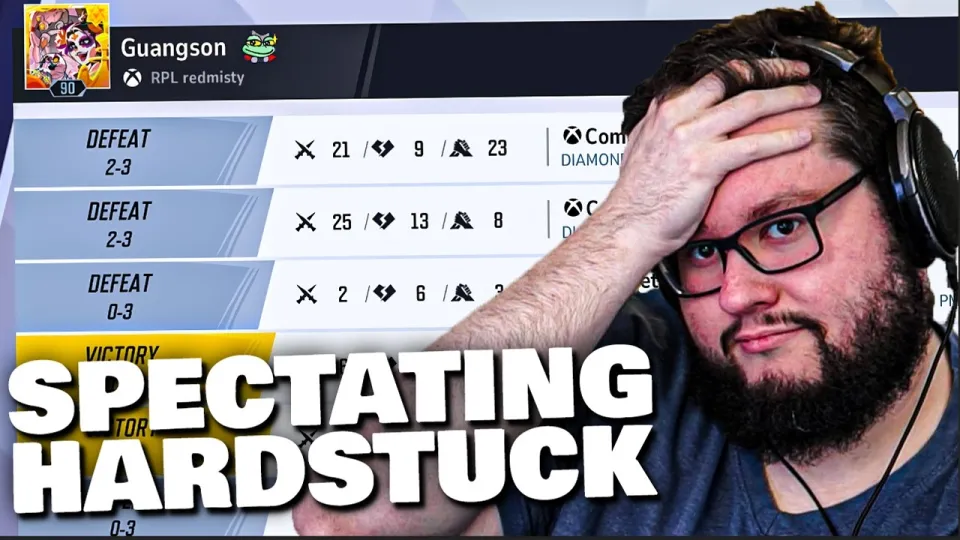
Video: I Spectated Someone Who Claimed To Be Hardstuck In Marvel Rivals
Want articles like this for your own video to promote it on YouTube and Google? Order them through the Telegram bot @sat_sit_bot. It writes articles around your video, embeds the video and publishes them on popular niche websites (no ads). Free trial — 50 articles.
· based on the channel Flats
Key takeaways
- Flats spectated a Marvel Rivals player named GuangSon who insisted his rank was held back by teammates.
- The account sat in Grandmaster despite the player describing himself as hardstuck and stuck with bad lobbies.
- The player mained Spider-Man and spent most of the session on Dagger while barely using Cloak's kit.
- Flats watched him walk past a health pack while looking for a health pack.
- Viewers pointed out that negative win rates can still climb in Marvel Rivals because of rank protection systems.
Marvel Rivals hardstuck stories usually collapse the moment someone else watches the replay. That is exactly what happened when Flats spectated a player who insisted his rank was the fault of his teammates: the account was sitting in Grandmaster, the hero choices were questionable, and the mistakes were visible within seconds. Anyone who wants to see the full session live can follow Flats on Twitch, where the spectating format runs regularly.
What the Marvel Rivals hardstuck experiment actually showed
The core finding is simple: the player's rank was Grandmaster, and his problems were mechanical and decision-based rather than matchmaking-based. Flats loaded into a spectate session after the player claimed he could not climb no matter what he did, then walked through the gameplay in real time. What followed was a catalogue of small errors that compound over hundreds of games.
The most repeated issue was positioning. A support player who stands in the open, away from cover and outside healing range of the tank, will lose duels that a correctly placed support wins for free. The second issue was cooldown discipline: abilities were spent on approach rather than on reaction, so every engagement started with the kit already half empty. Neither of those is fixed by a better team.
The Dagger who refused to play Cloak
The single most damaging habit in the session was playing Dagger as if Cloak did not exist. In Marvel Rivals, Cloak & Dagger is one hero with two stances, and the value comes from swapping constantly: Dagger for healing and area denial, Cloak for the blind, the damage window and the escape. The spectated player stayed on Dagger almost permanently.
That choice has concrete costs:
- Cloak's Terror Cape applies a blind that can shut down a dive before it lands; skipping it removes the hero's main defensive tool.
- Dark Teleportation is the escape that turns a lost fight into a reset; without it, the support simply dies.
- Dagger's healing output alone is not enough to justify the pick when the enemy team is running burst damage.
Viewers watching the session immediately recognised the pattern, because a support who uses half a kit is one of the most common sights in ranked Marvel Rivals.
Missed health packs and other basics Flats caught on camera
One moment stood out more than any strategic debate: the player walked straight past a health pack while visibly searching for a health pack. That single clip explains more about being stuck than any stat sheet. Map knowledge in Marvel Rivals is not optional, and every competitive map has pack locations that decide whether a flank survives or feeds.
The same session showed other fundamentals slipping:
- Ultimate usage that arrived after the fight was already lost, including a Magneto ult that whiffed and left the character standing in visible disappointment.
- No tracking of enemy ultimates, so defensive cooldowns were never held for the moment they mattered.
- Repeated solo engagements away from the team, followed by complaints that the team was not there.
None of these require a different roster of teammates. They require a review of your own recording.
Why a negative win rate can still reach Grandmaster in Marvel Rivals
Marvel Rivals protects progress in ways that let players climb without a winning record. Rank protection, chrono tokens and shield systems mean a player can lose more games than they win and still drift upward across a season. That is why a Grandmaster badge is not proof of Grandmaster-level decisions.
This matters for the hardstuck debate because it changes what the rank means. If the ladder rewards volume as much as skill, then the players most likely to feel stuck are the ones who play a lot, hover around a 45–48% win rate, and never review their games. The climb stalls not because the system is unfair but because the same mistakes are repeated at a higher rank than they should be.
Typical viewer questions about hardstuck players in Marvel Rivals
The most common reaction to sessions like this is a mix of recognition and dread: players say this is exactly the teammate they get one game away from a promotion, and others admit the footage looks uncomfortably familiar. Three themes come up again and again.
First, ego versus evidence. A player who insists the team is the problem will not review a replay, and without review the errors stay invisible. Second, the Spider-Man factor: dive mains who never take accountability for a failed engagement tend to blame supports for not following them into impossible positions. Third, the fear of being the subject. The healthy response is to treat the spectate as a checklist rather than an insult, and to run your own replay through the same questions: did I use my full kit, did I know where the packs were, did I hold a cooldown for the enemy ult.
What to fix first if you think you are hardstuck
Start with the hero kit, not the team. Pick one support or tank and learn every ability, including the ones you currently ignore, then play ten games where the only goal is using each cooldown at least once per fight. After that, learn three health pack locations on each map you queue into, and review one lost game per session for positioning errors rather than teammate errors.
Flats built this spectate format on exactly that principle: watch the decisions, not the scoreboard. The video breakdown on the Flats channel walks through the session decision by decision, and the live version runs on Flats' Twitch channel if you want to see the next volunteer get reviewed in real time.
All links from the video
Final verdict on the Marvel Rivals hardstuck claim
The session settles the argument: the rank was Grandmaster, the mistakes were basic, and no teammate could have fixed a Dagger who never became Cloak. Flats turns that into a useful lesson rather than pure comedy, because every error shown is one a viewer can check in their own replay tonight. If you enjoy this kind of breakdown, the Flats channel is the place to find more spectate sessions and ranked reviews.
Questions & answers
Is it possible to be hardstuck in Marvel Rivals if I have a negative win rate?
Yes, because rank protection and progression systems can carry a player upward even below a 50% win rate. That means a high rank does not automatically prove high-level decisions. The practical fix is to review your own replays instead of assuming the ladder is holding you back.
Why is playing Dagger without swapping to Cloak such a big problem?
Cloak & Dagger is designed around constant stance swapping. Cloak provides the blind, the damage window and the teleport escape, while Dagger covers healing and area control. Staying on Dagger removes most of the hero's defensive value and makes the support an easy target for dives.
What should I check first if I feel stuck in ranked Marvel Rivals?
Start with your own cooldown usage: are you spending abilities on reaction or on approach? Then check map knowledge, especially health pack locations, and whether you hold a defensive tool for enemy ultimates. These three habits decide more fights than team composition at most ranks.
Why do dive players like Spider-Man mains get blamed for blaming their team?
Dive heroes reward aggressive engagements that depend on timing and follow-up. When those engagements fail, it is easy to blame supports for not joining an impossible position. Reviewing the replay usually shows whether the dive was set up at the right moment or forced alone.
Source: I Spectated Someone Who Claimed To Be Hardstuck In Marvel Rivals · Markdown version